
Two moulding stages. One clear machining sequence.
We mould the core and teeth in two Nylon-6 formulations, then machine the bore and both faces in order so the finished features stay aligned.
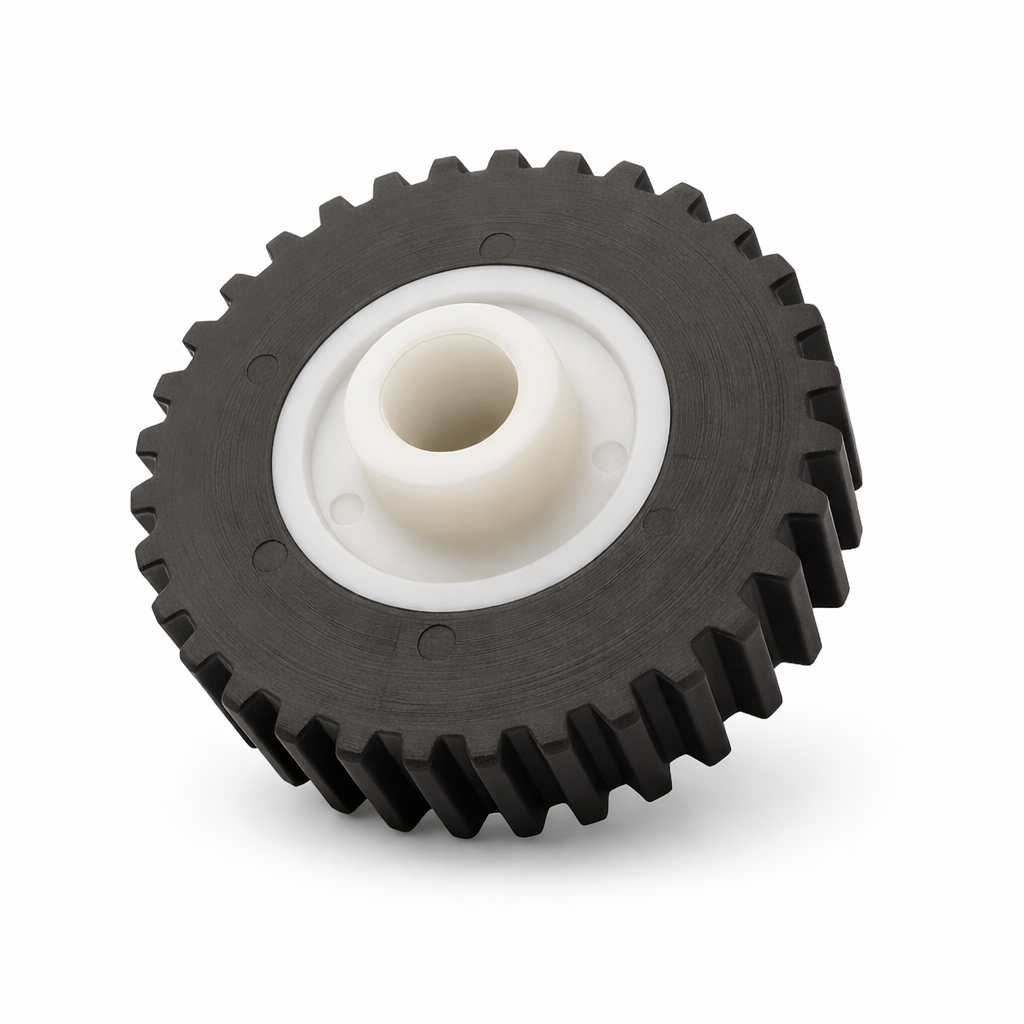
01 | Core and teeth
Mould the core first, then overmould the teeth.
We mould the internal core from 15% glass-filled Nylon-6. It becomes the insert for a second moulding stage, where MoS2-filled Nylon-6 forms the low-friction, wear-resistant teeth.
02 | Bore machining
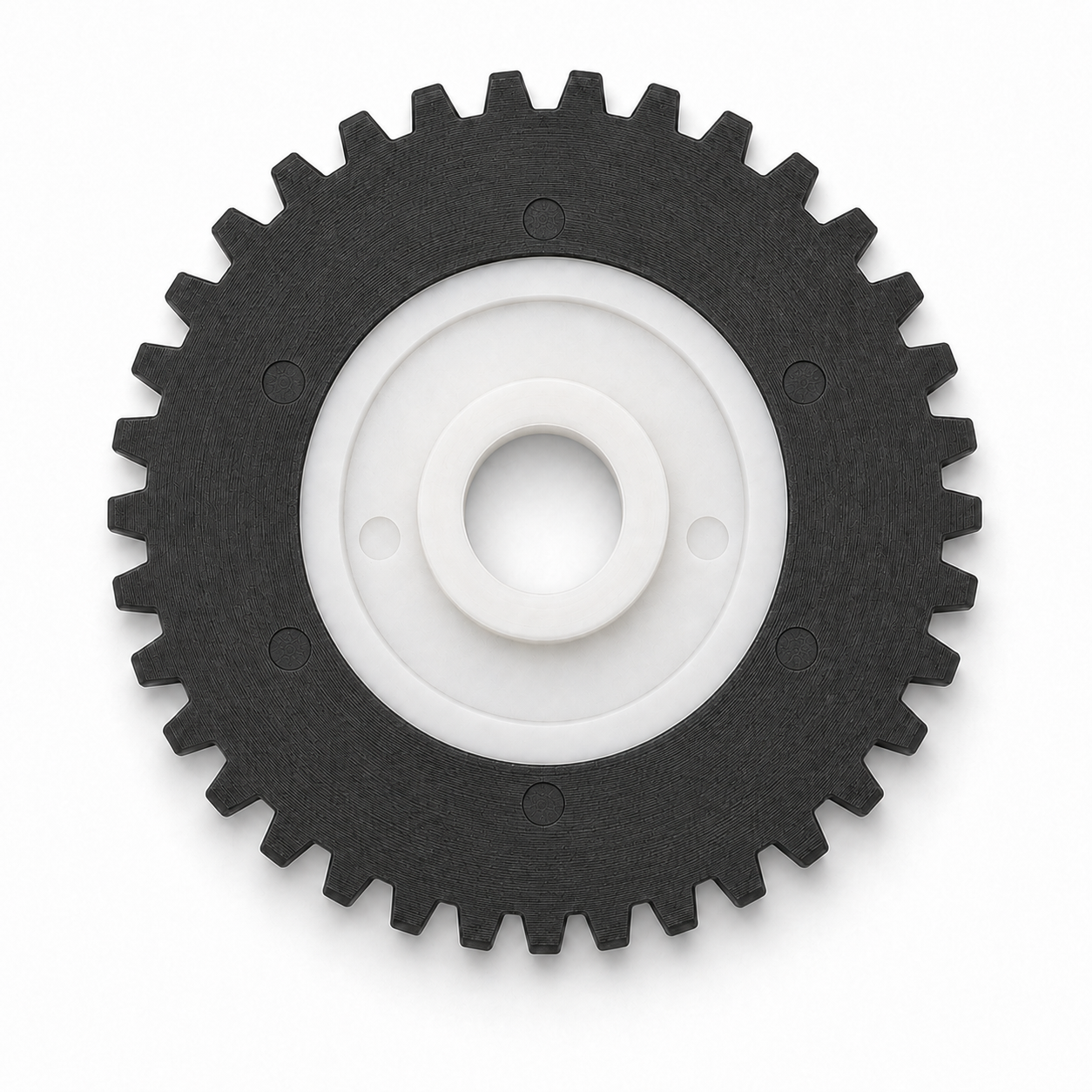
Use the outside diameter to machine the bore.
Moulding alone does not set final concentricity. We use the gear outside diameter (OD) as the reference and machine the insert inside diameter (ID) to create the finished bore.
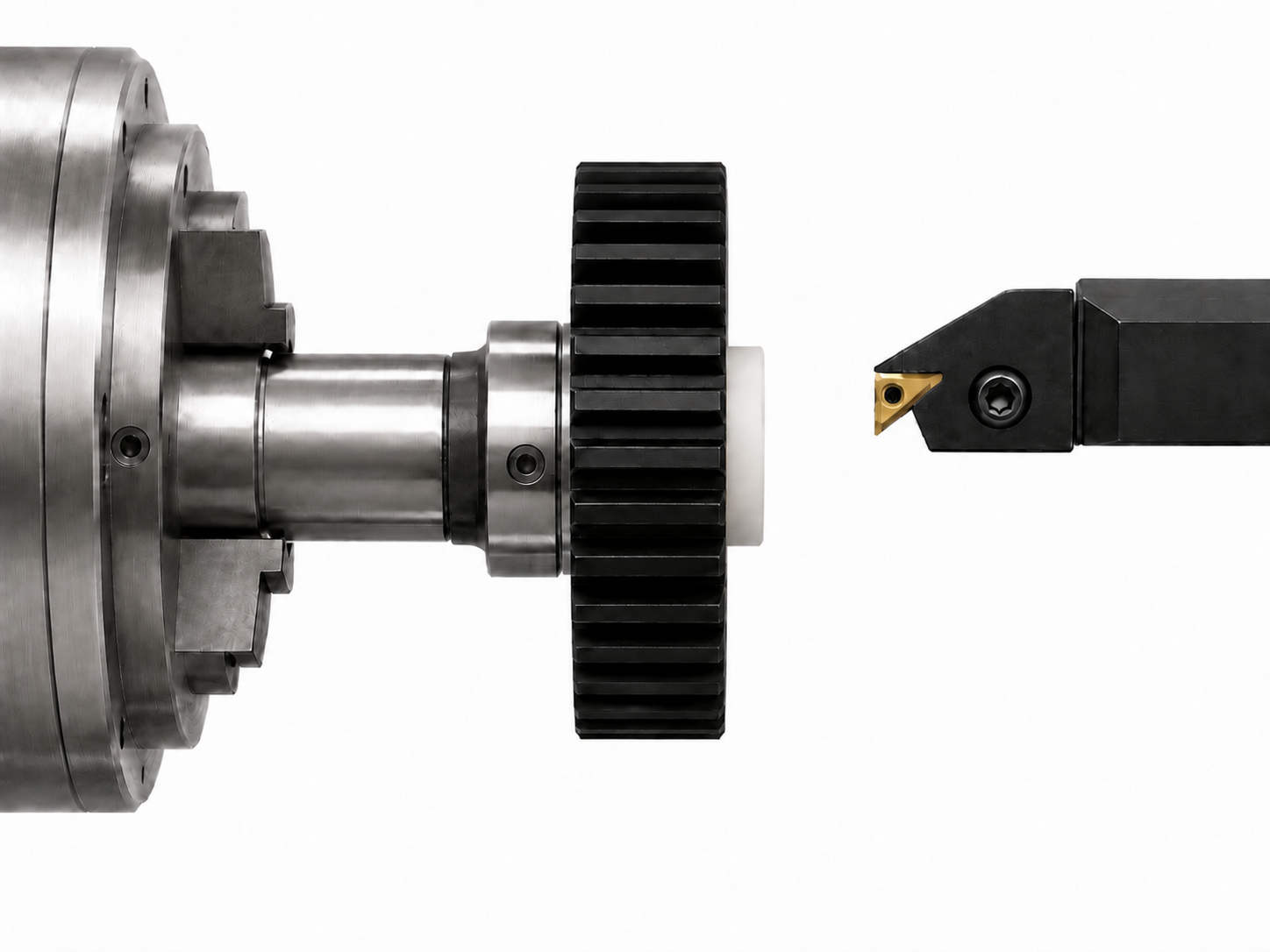
03 | Face machining
Use the finished bore to machine both faces.
The finished inside diameter (ID) becomes the holding reference for the next setup. We fixture the gear from that bore and machine both faces parallel.
The Risk: Split process
Misalignment can mean wobble, faster wear, or downtime.
This gear runs continuously in textile machinery. Its core, teeth, bore and faces need a consistent machining reference to keep the finished geometry aligned.
The Fix: Keep the key steps together
Moulding and final machining under one roof.
Parshwa Plastics moulds the core, overmoulds the teeth and machines the bore and faces in-house, supplying the finished gear from one production sequence.
Customer-Requested Variation
The same two-stage moulding process, adapted for another gear.
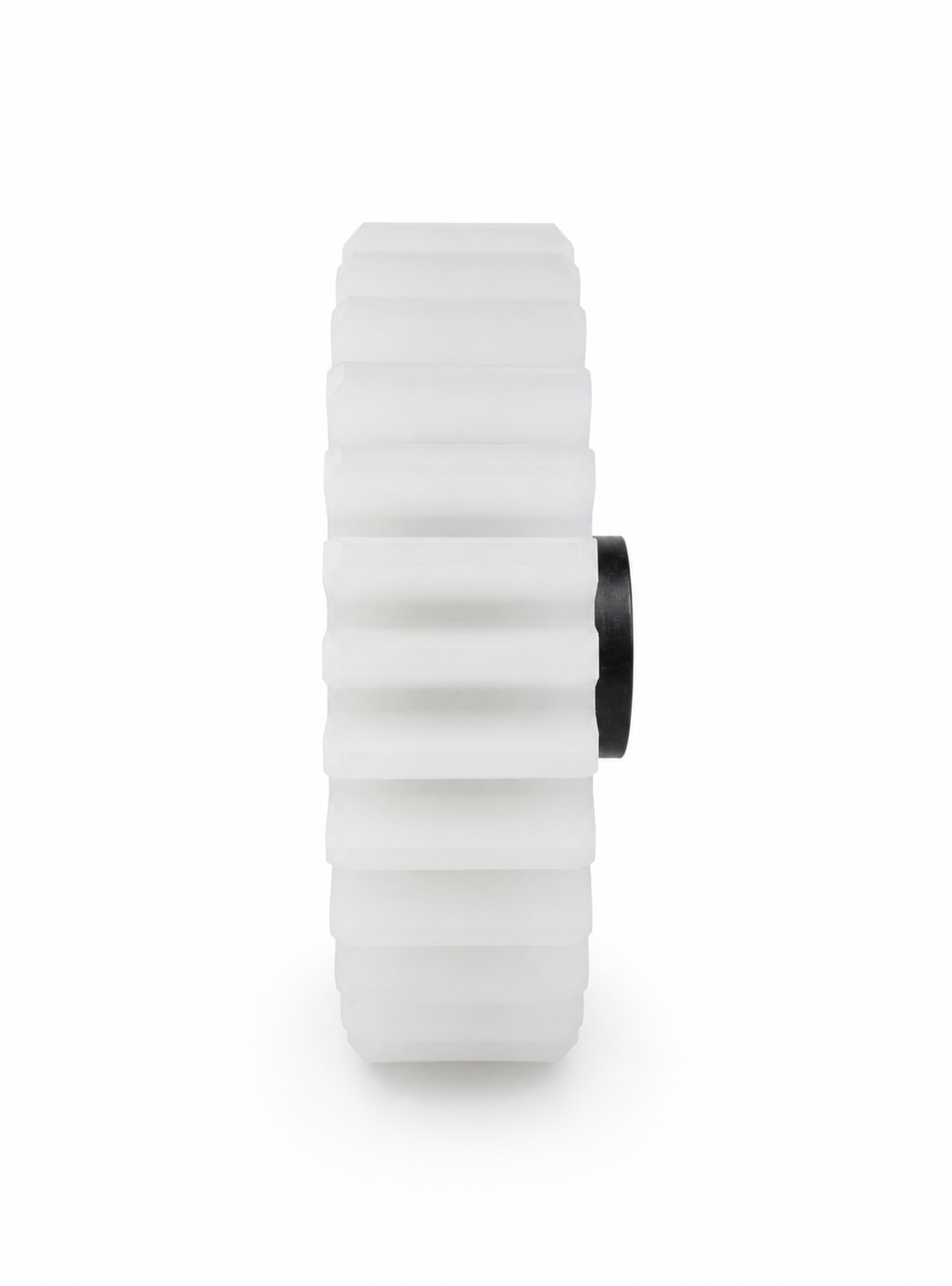
The customer required another gear design using a 10% glass-filled Nylon-6 inner component and a polyurethane outer moulding. We kept the same two-stage route: mould the inner component first, then mould the polyurethane around it to form the finished gear.
04 | Mould the inner component
10% glass-filled Nylon-6 is moulded first.
The internal component is produced as the first moulding. It provides the centre geometry and becomes the insert for the second moulding stage.
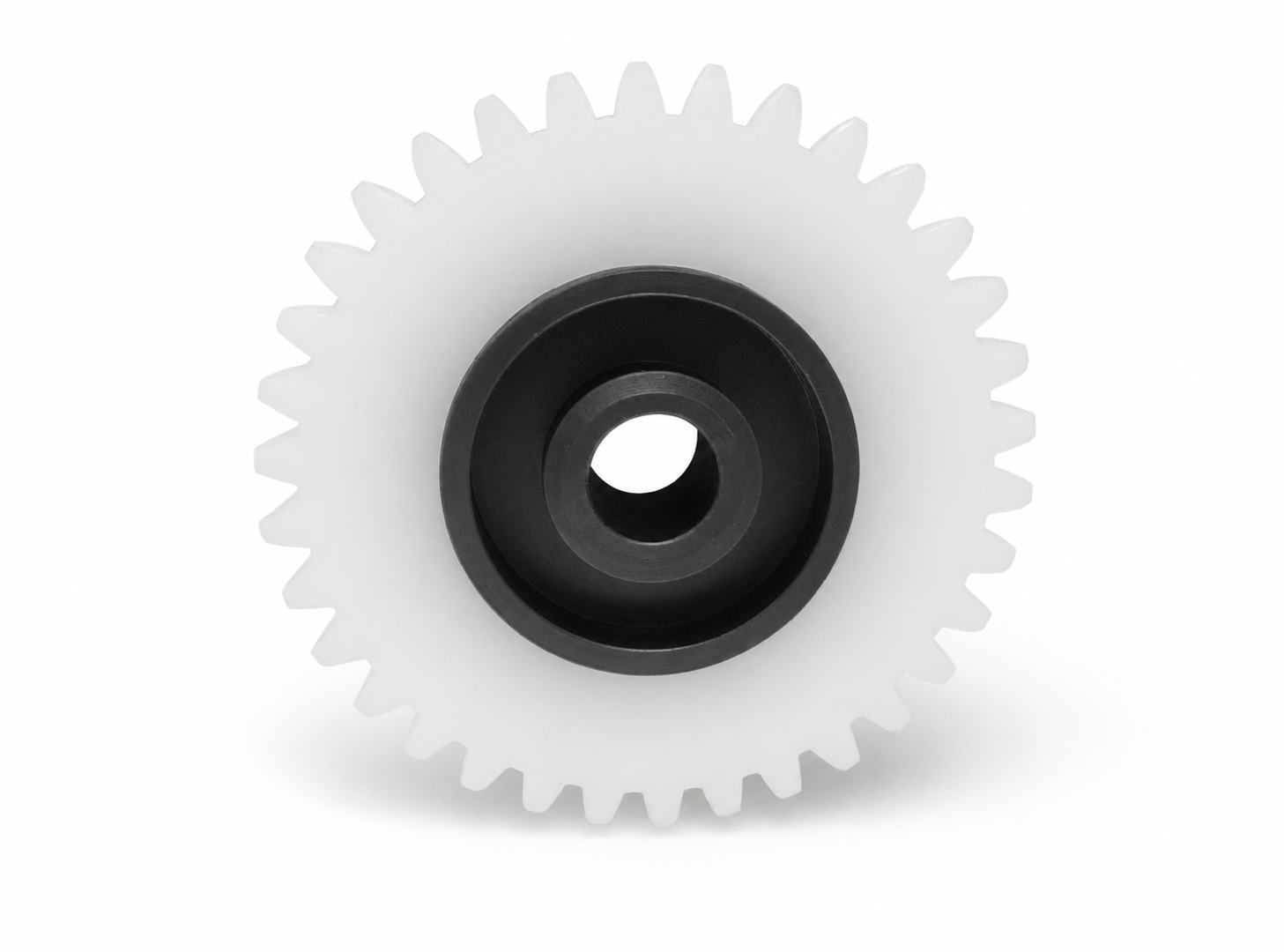
05 | Overmould the outer gear
Polyurethane forms the outer moulding.
The Nylon-6 component is placed into the second tool, and polyurethane is moulded around it to form the outer gear. The side view shows the two-material construction.
Customer-specific variation
Change the material combination, keep the process.
Parshwa Plastics adapted the part to the customer's required geometry and materials while retaining the established two-stage moulding sequence.